
Rosa Parks: The Woman Who Ignited the Civil Rights Movement
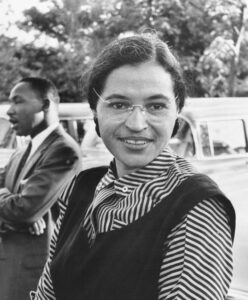
Rosa Parks is widely recognized as one of the most influential figures in American history. Often called “the mother of the civil rights movement,” she became a symbol of resistance against racial segregation and systemic injustice. Her quiet but resolute refusal to give up her bus seat in 1955 sparked a nationwide movement that transformed the United States. Rosa Parks’ legacy extends beyond race – she represents moral courage, women’s leadership, and the power of individual action in the face of injustice.
Early Life and Education
Rosa Louise McCauley was born on February 4, 1913, in Tuskegee, Alabama. Raised in the deeply segregated American South, she experienced racial discrimination from an early age. Despite limited educational opportunities for Black women, Parks pursued her education and later attended the Alabama State Teachers College. Education played a crucial role in shaping her political awareness and sense of justice.
Activism Before the Bus Incident
Contrary to the popular myth, Rosa Parks was not an accidental activist. Long before 1955, she was deeply involved in civil rights work. She served as secretary of the Montgomery chapter of the NAACP and worked on cases involving racial violence and injustice. Her activism was deliberate, informed, and rooted in years of organizing and resistance.
The Montgomery Bus Boycott
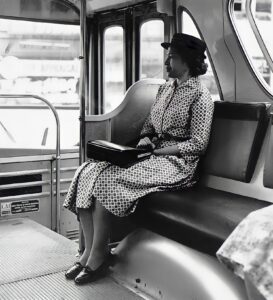
On December 1, 1955, Rosa Parks refused to surrender her seat to a white passenger on a segregated bus in Montgomery, Alabama. Her arrest triggered the Montgomery Bus Boycott, a 381-day mass protest led by the Black community. The boycott marked a turning point in American history and brought national attention to leaders such as Martin Luther King Jr. It ultimately led to a Supreme Court ruling that declared segregation on public buses unconstitutional.
Women, Resistance, and Moral Courage
Rosa Parks’ action challenged not only racial segregation but also gender expectations. As a Black woman in a patriarchal society, her defiance disrupted stereotypes of female passivity and obedience. Her resistance demonstrated that leadership does not always appear loud or aggressive – sometimes it manifests through dignity, restraint, and moral clarity.
Life After the Boycott
Following the boycott, Parks faced severe consequences, including job loss, threats, and economic hardship. She later moved to Detroit, where she continued her activism, advocating for housing rights, economic justice, and political reform. Throughout her life, Rosa Parks remained committed to social justice far beyond the single act for which she is most remembered.
Legacy and Global Impact
Rosa Parks received numerous honors, including the Presidential Medal of Freedom and the Congressional Gold Medal. Her legacy continues to influence movements for racial equality, women’s rights, and human rights around the world. She stands as a reminder that systemic change often begins with individual courage.
Why Rosa Parks Still Matters Today
In an era where civil rights and democratic values continue to be challenged, Rosa Parks’ life offers a timeless lesson: justice requires action, even when the cost is personal. Her story reinforces a core principle of modern feminism and human rights advocacy – that the fight for equality is interconnected and inclusive, not competitive or exclusionary.