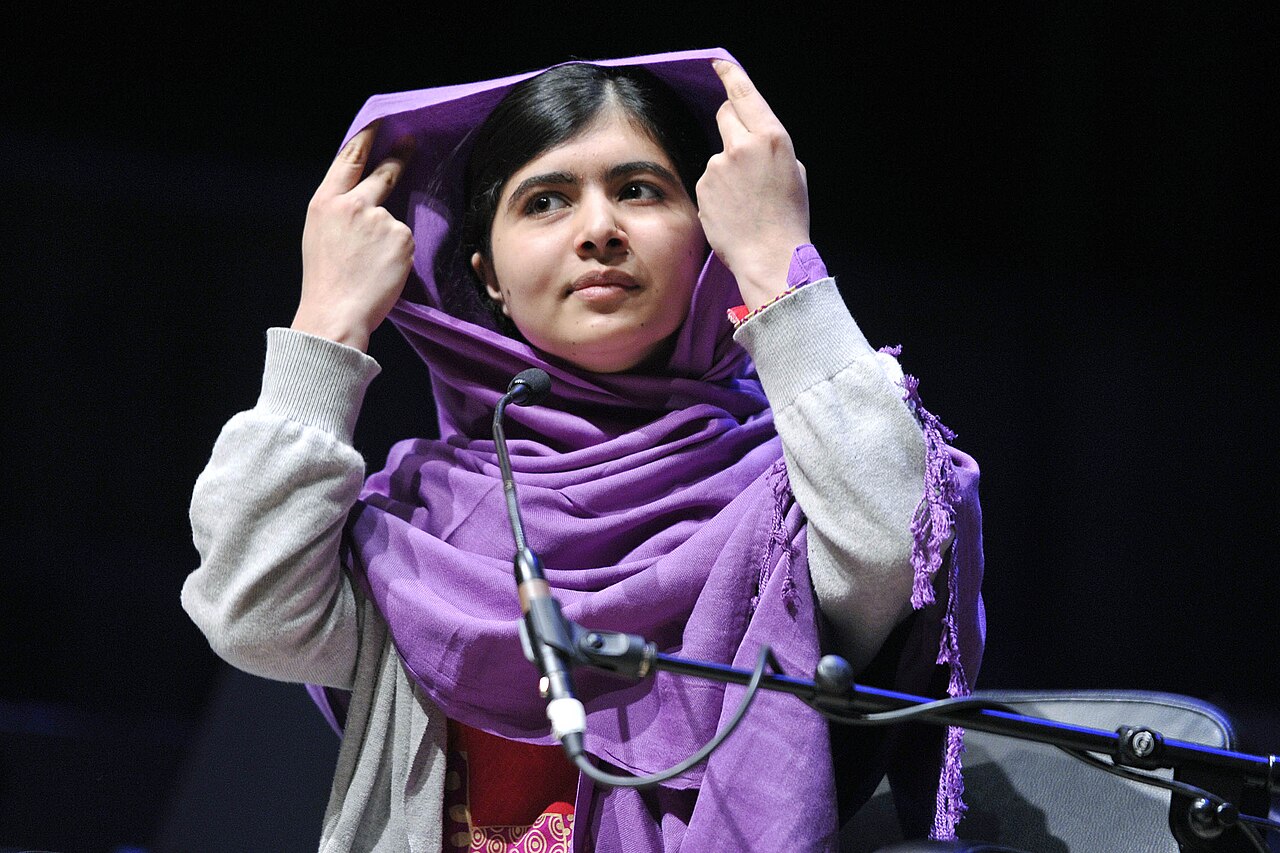
Photo by Southbank Centre — CC-BY 2.0
Malala Yousafzai: The Girl Who Fought for Education and Changed the World
Malala Yousafzai is a Pakistani activist, Nobel Peace Prize laureate, and one of the most influential young voices advocating for girls’ education globally. Her courage, determination, and resilience have inspired millions, proving that age and gender are not barriers to changing the world. Through her activism, Malala has highlighted systemic inequalities in education and championed women’s rights, becoming a symbol of hope, empowerment, and global awareness.
Early Life and Education Childhood in Swat Valley
Malala Yousafzai was born in 1997 in the Swat Valley of Pakistan. Growing up under the Taliban’s oppressive regime, she witnessed firsthand the challenges girls faced in accessing education. Her father, an educator, encouraged her learning and instilled the value of knowledge and equality.
Early Advocacy
At just 11 years old, Malala began writing a blog for the BBC about life under the Taliban, describing the restrictions on girls’ education. Her voice quickly gained international attention, marking the beginning of her journey as an activist.
The Attack and Global Recognition Surviving Violence
In 2012, Malala was shot in the head by a Taliban gunman while traveling home from school. Miraculously, she survived the attack, and her recovery became a global story of resilience, courage, and advocacy.
Nobel Peace Prize
In 2014, at age 17, Malala became the youngest-ever recipient of the Nobel Peace Prize. She was recognized for her struggle against the suppression of children and young people and for the right of all children to education.
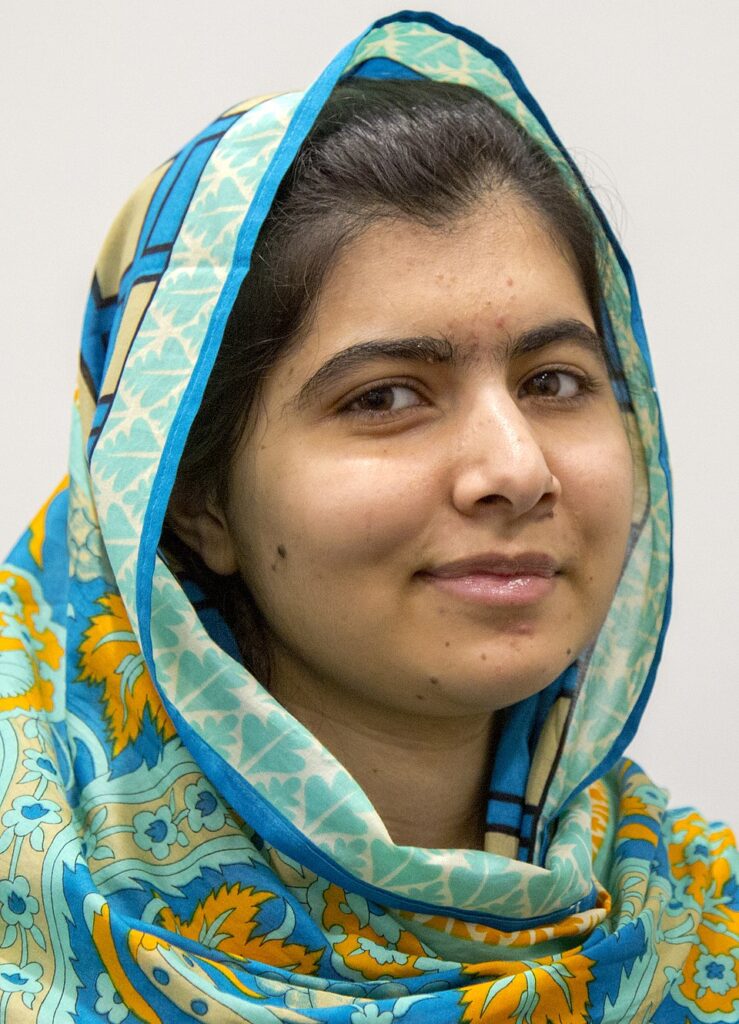
Photo by Simon Davis / DFID — licensed under CC‑BY 2.0
Activism and Impact Malala
Fund
Malala co-founded the Malala Fund, an organization dedicated to ensuring 12 years of free, safe, and quality education for every girl. The Fund supports education projects in multiple countries, advocates for policy changes, and empowers girls to become leaders in their communities.
Global Influence
Malala has spoken at the United Nations, met with world leaders, and used her platform to amplify the voices of girls worldwide. Her memoir, I Am Malala, has been translated into multiple languages, educating millions about the importance of education and human rights.
Challenges and Continued Work Advocacy in a Complex World
Even after global recognition, Malala faces criticism and challenges, particularly in regions where cultural, religious, or political barriers restrict girls’ education. Yet, she remains committed to addressing systemic inequalities and inspiring the next generation.
Symbol of Courage
Malala embodies the idea that one voice, no matter how young, can challenge oppression and make a lasting difference. Her story continues to motivate activism, policy change, and international cooperation around education.
Legacy and Lessons Inspiring Future Generations
Malala Yousafzai’s life demonstrates the transformative power of education, courage, and persistence. She has become a role model not just for young girls, but for anyone committed to justice, equality, and human rights.
Why Malala Matters
Malala’s activism reminds the world that education is a universal right, and that fighting for justice requires both courage and unwavering dedication.
Malala Yousafzai is more than an activist – she is a global symbol of hope and empowerment. Her life teaches that standing up for one’s beliefs, even in the face of extreme danger, can change the world and inspire generations to come.