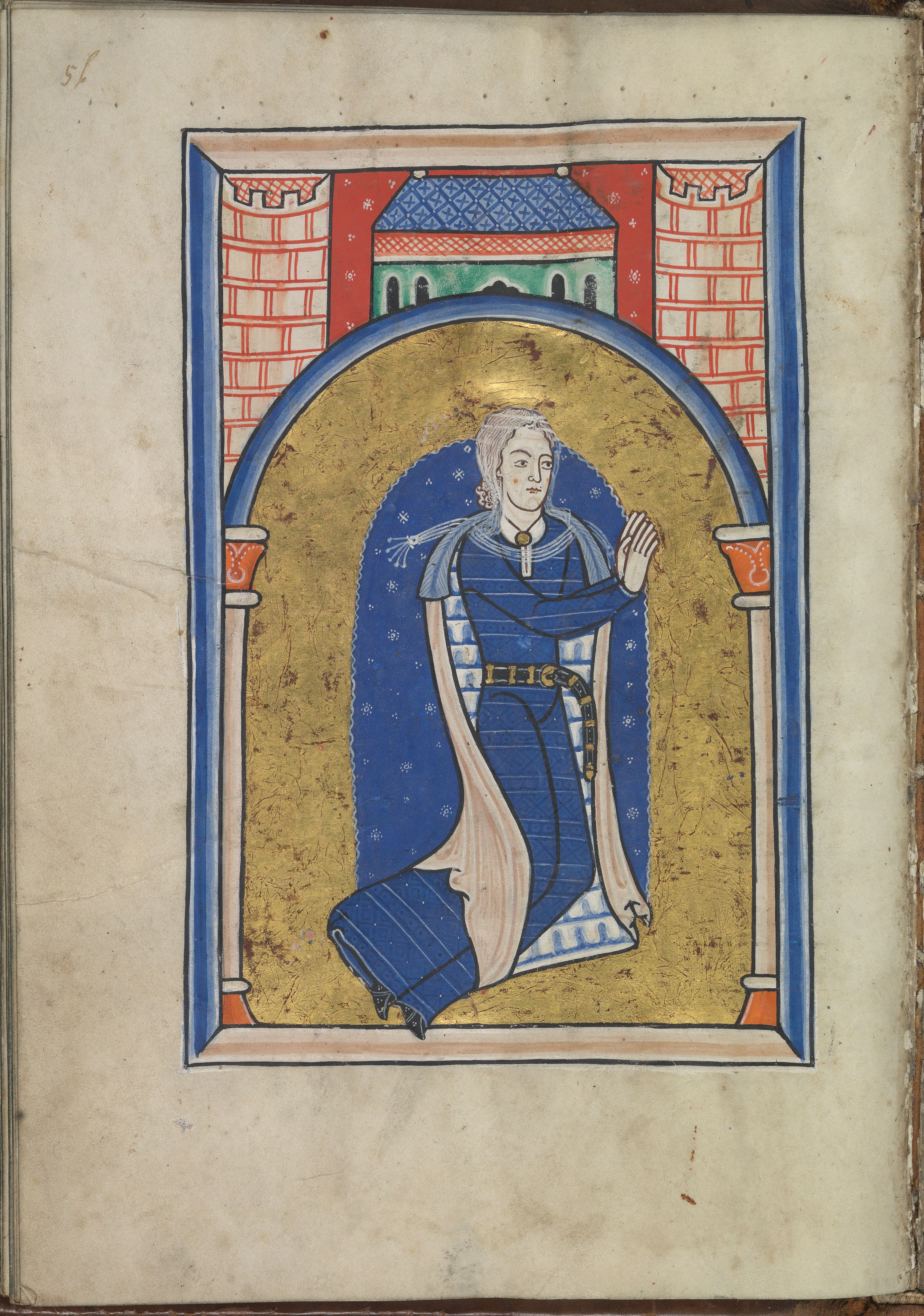
The High Middle Ages (1000–1300 CE) were a period of major social, economic, and cultural change in Europe. Women played essential roles in agriculture, trade, family life, religion, and, in some cases, politics and intellectual activity.
Although medieval societies generally placed men in positions of formal authority, women’s experiences were far from uniform. A peasant working on a farm, a merchant’s wife living in a growing town, and a noblewoman managing extensive estates faced very different opportunities and restrictions.
Women in the High Middle Ages could work, own or inherit property under certain conditions, receive an education, and sometimes exercise considerable authority. Their rights and responsibilities depended on social class, marital status, local customs, and legal traditions.
Understanding their lives reveals a more complex picture of medieval society than the familiar images of knights, castles, and kings.
The High Middle Ages: Historical Background
Period: Approximately 1000–1300 CE
The High Middle Ages followed the Early Middle Ages (500–1000) and preceded the Late Middle Ages.
During these centuries, much of Europe experienced population growth, agricultural expansion, and the development of towns and trade networks. Religious institutions became increasingly influential, while new schools and universities contributed to intellectual life.
These developments affected women in several ways:
- Expanding towns provided opportunities for commercial and craft-related work.
- Wealthy women sometimes managed estates and inherited substantial property.
- Religious communities offered some women access to education and leadership.
- Developing legal institutions influenced marriage and inheritance arrangements.
- Dynastic politics allowed a small number of women to exercise exceptional political authority.
However, these changes did not produce equal rights. Women’s opportunities remained strongly influenced by family structures, economic circumstances, and local law.
The term High Middle Ages primarily describes European history. Other regions experienced their own political and cultural developments during the same period.
Daily Life and Social Roles of Medieval Women
For most women, daily life centered on family responsibilities and economic work. Social class was particularly important in determining how they lived.
Peasant Women
Most medieval Europeans lived in rural communities, where agriculture provided the foundation of the economy.
Peasant women worked in fields, cared for livestock, processed food, spun fibers, and maintained households. During busy agricultural seasons, women and men often contributed to the same farming activities.
Childcare, food preparation, and clothing production added to women’s responsibilities.
Although much of this work went unpaid, it was essential to household survival and rural production.
Noblewomen
Noblewomen generally had greater access to wealth and education, but their lives were also shaped by marriage alliances and inheritance expectations.
Some supervised estates, managed household finances, organized supplies, and maintained relationships with local officials.
When husbands were absent, noblewomen could take responsibility for property administration. Widows and heiresses sometimes enjoyed greater legal and financial independence.
Nevertheless, their wealth could make them targets of political pressure or unwanted marriage arrangements.
Women in Medieval Towns
The growth of European towns opened additional economic opportunities.
Women participated in textile production, food preparation, brewing, retail trade, domestic service, and family businesses.
Their independence varied. Some managed businesses or sold goods in markets, while others worked under the authority of husbands, relatives, or employers.
Urban life offered possibilities that differed from rural agriculture, but it did not eliminate gender-based restrictions.
Marriage, Family, and Women’s Rights
Marriage shaped women’s legal status, economic opportunities, and relationships with their families.
Among noble families, marriage frequently served political and financial purposes. For ordinary households, economic circumstances and the ability to maintain a family were important considerations.
During the twelfth century, Western Christian canon law increasingly established the mutual consent of the couple as essential to a valid marriage.
This was an important legal principle, but it did not guarantee unrestricted personal choice. Family pressure and economic dependence remained powerful influences.
Could Medieval Women Own Property?
Yes, although property rights varied significantly across regions and legal systems.
Women could sometimes acquire land or goods through inheritance, marriage arrangements, or widowhood. Their ability to control or transfer property depended heavily on marital status.
In medieval England, for example, marriage generally restricted a woman’s independent control over real property, while widowhood could provide greater opportunities for economic autonomy.
A notable example was Isabella de Fortibus (1237–1293), an English heiress who controlled extensive estates, including the Isle of Wight, and resisted efforts to secure her remarriage.
Her experience was exceptional, but it demonstrates that women’s property ownership was possible within medieval legal structures.
Women’s Work and Economic Contributions
Medieval women contributed to both household production and wider commercial activity.
Their occupations included:
- Agricultural labor and animal husbandry.
- Spinning, sewing, and textile production.
- Brewing, baking, and food-related trades.
- Selling goods at markets.
- Domestic service and household administration.
- Assisting with or managing family businesses.
In towns, women sometimes participated in craft organizations or worked in trades regulated by guilds. Access depended on local practices and the occupation involved.
Women’s economic activities are documented in medieval financial records, wills, and legal proceedings.
However, surviving records do not capture the full value of their labor, particularly unpaid household and agricultural work.
The idea that medieval women never worked outside the home is therefore historically inaccurate.
Religion and Women’s Influence
Christianity shaped much of European social and cultural life during the High Middle Ages.
Religious teachings influenced marriage, morality, family responsibilities, and education. At the same time, monasteries and convents provided some women with opportunities unavailable elsewhere.
Nuns and Abbesses
Women in religious communities participated in prayer, study, manuscript production, and the administration of their institutions.
Some convents possessed libraries and provided education.
Abbesses could oversee property, finances, and members of their communities, giving them substantial administrative responsibility.
However, religious life also involved strict rules, and women remained excluded from priestly ordination in the Western Church.
Religious communities therefore combined important restrictions with opportunities for female leadership and intellectual activity.
Education and Intellectual Life
Formal education was limited for most medieval women.
Girls from wealthy families sometimes learned reading, religious subjects, languages, and practical administrative skills. Others received instruction within convents.
The universities emerging in twelfth- and thirteenth-century Europe were overwhelmingly male institutions, but intellectual life extended beyond universities.
Women contributed to religious scholarship, literature, music, and historical writing.
Hildegard of Bingen (1098–1179), a German Benedictine abbess, became one of the best-known intellectual figures of the twelfth century. She composed music, wrote theological works, and maintained correspondence with influential religious and political figures.
Marie de France, active in the late twelfth century, produced influential poetry that explored love, loyalty, and relationships.
Such examples demonstrate that opportunities for female scholarship existed, although they were available to a relatively small number of women.
Women in Medieval Politics and Leadership
Political leadership was predominantly male, yet women sometimes exercised power through inheritance, marriage, regency, and dynastic connections.
Queens and noblewomen could participate in diplomacy, supervise territories, and influence succession disputes.
Female authority was frequently challenged, particularly when women claimed positions traditionally held by men.
Eleanor of Aquitaine (c. 1122–1204) inherited the Duchy of Aquitaine and became queen of both France and England. She played a significant role in dynastic politics and later exercised authority during the reign of her son Richard I.
Empress Matilda (1102–1167) fought for the English throne during a prolonged succession conflict. Although she never became an uncontested ruling queen of England, her efforts helped secure the succession of her son Henry II.
Beyond Western Europe, Queen Tamar of Georgia (r. 1184–1213) exercised sovereign authority during a period of political and cultural expansion in the medieval Caucasus.
These rulers were unusual, but their careers reveal that women’s political authority was not entirely absent from medieval societies.
Famous Women of the High Middle Ages: Timeline
| Dates | Historical figure | Historical significance |
|---|---|---|
| 1046–1115 | Matilda of Tuscany | Powerful Italian noblewoman and political figure |
| 1098–1179 | Hildegard of Bingen | Abbess, composer, and religious writer |
| 1102–1167 | Empress Matilda | Contender for the English throne |
| c. 1122–1204 | Eleanor of Aquitaine | Duchess and queen of France and England |
| Late 12th century | Marie de France | Influential medieval poet |
| 1184–1213 | Queen Tamar of Georgia | Reigning monarch of Georgia |
| 1237–1293 | Isabella de Fortibus | English landowner and influential widow |
Dates refer to lifespans, periods of activity, or reigns, as appropriate.
Frequently Asked Questions
What was life like for women in the High Middle Ages?
Most women combined household responsibilities with productive labor. Their experiences differed according to social class, location, wealth, and marital status. Some women also worked in trades, managed estates, or belonged to religious communities.
Did women have rights in the Middle Ages?
Yes, but their rights were unequal and varied by region. Some women could inherit property, make legal claims, or administer businesses, particularly as widows. Marriage often restricted their independence.
Could medieval women work and earn money?
Yes. Women participated in agriculture, textile production, food-related trades, markets, domestic service, and family businesses. However, their control over earnings and property differed across legal systems.
Were women allowed to receive an education?
Some women received education in aristocratic households, religious communities, or other informal settings. Most lacked access to advanced formal schooling, but educated women contributed to medieval literature and religious scholarship.
Could women become rulers during the High Middle Ages?
Yes, although female sovereigns were uncommon and often faced challenges to their authority. Eleanor of Aquitaine, Empress Matilda, and Queen Tamar illustrate different forms of female political influence.
Why Women’s History in the High Middle Ages Matters
Women’s experiences between 1000 and 1300 reveal the importance of looking beyond official political institutions when studying medieval society.
Women contributed to agricultural production, urban economies, family wealth, education, religious culture, and political affairs.
Yet their opportunities were shaped by unequal legal structures, social expectations, and access to resources.
Rather than presenting medieval women as either entirely powerless or universally independent, historical evidence reveals a wide range of experiences.
Studying these differences helps explain how women’s roles developed over time and why legal rights, economic participation, and social authority did not always advance together.
Explore More Women’s History
Continue exploring the development of women’s roles and rights across different historical periods:
- Women in the Early Middle Ages (500–1000) — Explore women’s lives in the centuries preceding the High Middle Ages.
- Women’s History Timeline — Discover more articles about women’s experiences throughout history.
Sources and Further Reading
- https://www.nationalarchives.gov.uk/education/teaching-resources/medieval-women/ Historical records documenting women’s work, property, and social positions.
- https://www.bl.uk/about/press/releases/british-library-to-open-exhibition-about-medieval-women British Library — Medieval Women: In Their Own Words. Medieval women’s lives, intellectual activity, and social influence.
- https://assets.cambridge.org/97805218/77282/excerpt/9780521877282_excerpt.htm Cambridge University Press — Law, Marriage, and Society in the Later Middle Ages. The development of medieval marriage law and mutual consent.
- https://www.english-heritage.org.uk/learn/histories/women-in-history/eleanor-aquitaine/ English Heritage — Eleanor of Aquitaine. Medieval queenship and political influence.
- https://www.english-heritage.org.uk/learn/histories/women-in-history/isabella-de-fortibus/ English Heritage — Isabella de Fortibus. Property ownership, widowhood, and legal autonomy.
- https://www.metmuseum.org/ru/essays/monasticism-in-western-medieval-europe The Metropolitan Museum of Art — Monasticism in Western Medieval Europe. Religious institutions, manuscripts, and medieval intellectual culture.